 Dead Level TV Mounting
Guide · 2026-10-24
Mounting a TV on metal studs (condos and high-rises)
Why steel studs in Austin condos and high-rises need different anchors than a house, and what a solid install on them looks like.
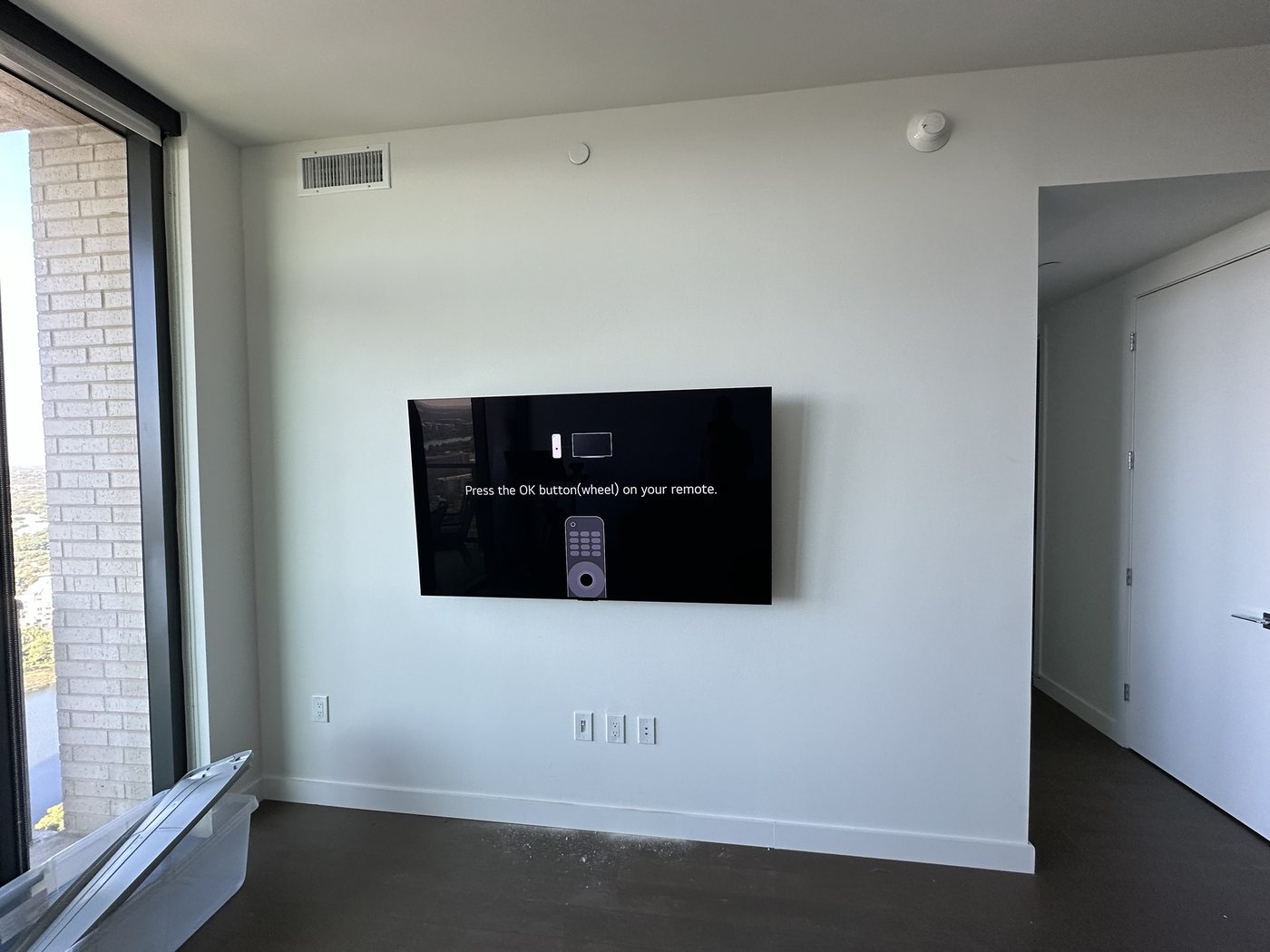
Most houses in Austin have wood studs behind the drywall. Most downtown towers and many newer condo buildings don't. Their walls are framed with light-gauge steel studs, and that changes how a TV has to be hung.
Why the usual method doesn't work
On wood studs, a mount is held by lag bolts screwed into the solid wood. A steel stud is a thin, hollow, C-shaped channel, so a lag bolt has almost nothing to bite. It might feel tight on day one, but a heavy TV, and especially a full-motion arm pulling on the wall, can work it loose.
What I use instead
I drill through the steel itself and use high-strength toggle anchors that open up behind the stud and clamp onto the back of it. The load spreads across the steel instead of hanging on a few screw threads. Most of my installs so far have been in a downtown high-rise, so I've done this many times.
How to tell what's in your wall
- Building type: a downtown tower or newer mid-rise condo is very likely steel.
- A magnet: slide a strong magnet across the wall. It will stick at screws, and if those screws run in a vertical line every 16 or 24 inches, those are steel studs.
- Knocking: steel and wood sound similar through drywall, so knocking won't tell you.
When you book, choose "Drywall, metal studs" (+$30) if you know or suspect it. If you're not sure, I'll check on site.
Building rules
Many high-rises have rules for contractors: a certificate of insurance, set work hours, or a booked elevator. Put your building's rules in your booking notes and I'll take care of it before the visit.
Get your TV on the wall
See your exact price in 30 seconds, then pick a time. The $50 deposit comes off your final price.